Abstract
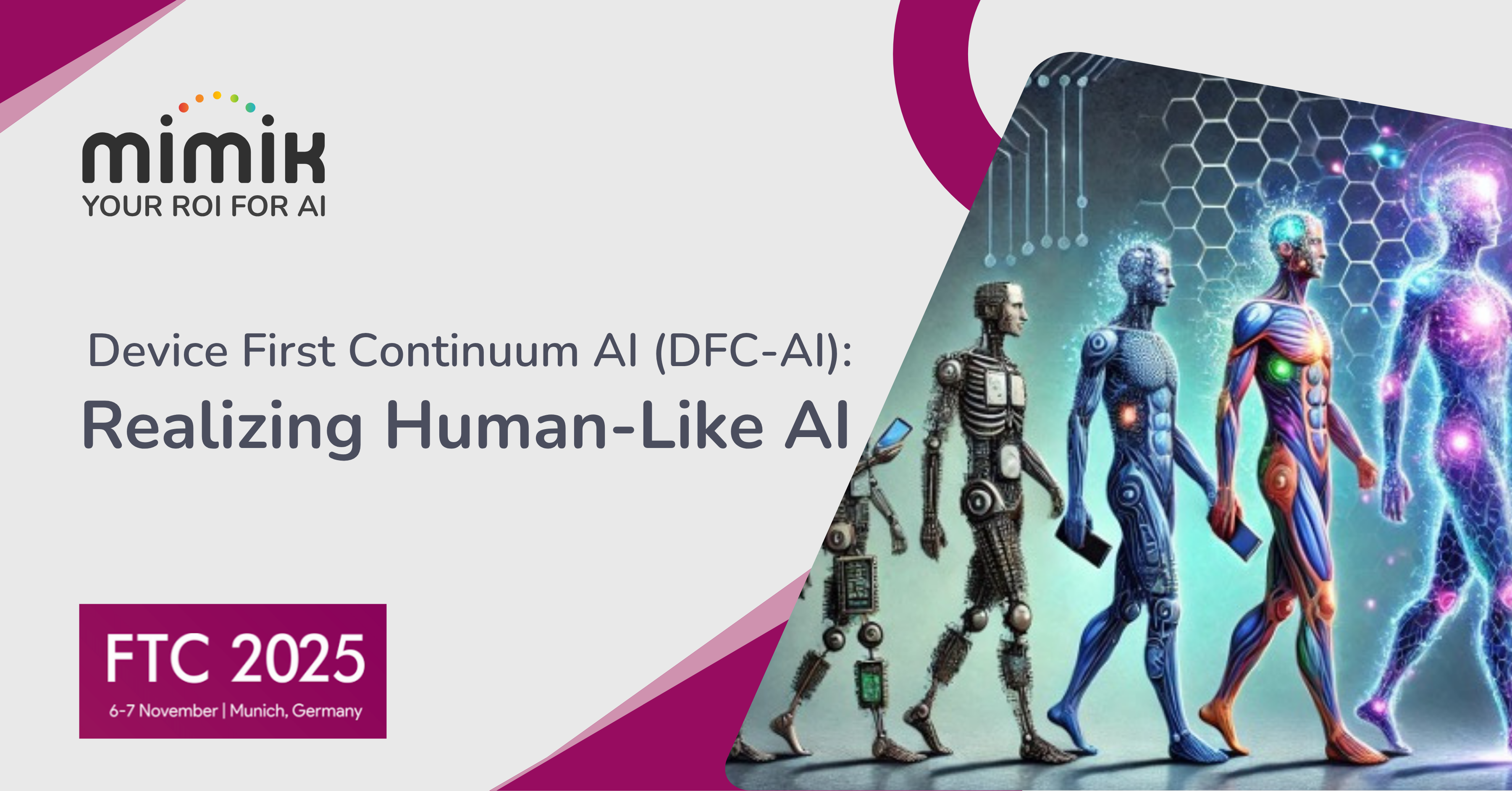
This study introduces Device First Continuum AI (DFC-AI), a transformative architecture within the Hybrid Edge Cloud paradigm designed to address the limitations of traditional cloud-centric artificial intelligence across diverse applications. DFC-AI prioritizes the deployment of intelligent agents, built on a microservices framework, that originates and primarily resides on end devices, extending to gateways and cloud servers as needed. This Device-First approach is essential for enabling real-time decision-making and personalized experiences for both industrial and consumer applications, particularly in scenarios demanding low latency, operation in disconnected environments, and efficient management of massive data streams. The study highlights the fundamental challenges of relying solely on centralized cloud or basic edge computing models, including prohibitive bandwidth costs, energy inefficiency, and compromised user privacy. By embedding intelligence at the device level, DFC-AI overcomes these limitations, fostering autonomous operation, seamless collaboration among devices, and substantial reductions in operational overhead, moving us closer to realizing the potential of truly human-like artificial intelligence in machines. Through illustrative examples spanning various sectors, this study demonstrates the potential of DFC-AI to unlock a new era of holistic, responsive, and user-centric intelligent systems, paving the way for innovative applications and enhanced digital experiences in an increasingly connected world.